$9.75 Original price was: $9.75.$9.25Current price is: $9.25.
Wild Ginger
Asarum canadense
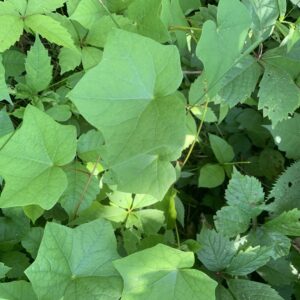
A beautiful native woodland groundcover with large, soft, heart-shaped leaves that form dense carpets across the forest floor. Wild Ginger grows low to the ground, creating lush green layers beneath trees and shrubs while helping retain soil moisture and suppress weeds.
Hidden beneath the leaves in early spring, unusual maroon to brown jug-shaped flowers emerge close to the soil surface. These unique blooms are pollinated by small insects that move along the forest floor.
A Woodland Groundcover
Wild Ginger spreads slowly through shallow rhizomes, forming thick colonies that help stabilize woodland soils and create habitat for beneficial insects. Its broad leaves shade the soil and maintain cool, moist conditions that support healthy forest ecosystems.
Because of its attractive foliage and ability to thrive in shade, Wild Ginger is one of the best native groundcovers for woodland gardens and naturalized forest plantings.
A Plant of Forest Floors
Wild Ginger grows naturally in rich deciduous forests, shaded slopes, and woodland edges where soils are moist and rich with organic matter. It thrives in deep shade and blends beautifully with other native woodland species.
Once established, it requires little maintenance and provides long-term ecological benefits in shaded landscapes.
Growing Information
Height: 6–10 inches
Spread: 12–24 inches (forming colonies)
Light: Part shade to full shade
Soil: Rich, moist woodland soils
Hardiness: Zone 3–7
Growth Rate: Slow to moderate (spreads by rhizomes)
Best planted in woodland gardens, forest restorations, shaded borders, and naturalized understory plantings.
Ecological Importance
Wild Ginger:
Forms dense groundcover that protects woodland soils
Provides habitat for beneficial insects
Supports biodiversity in forest understory ecosystems
Helps maintain moisture and soil stability in woodland environments
Associated Woodland Species
Common companions in natural woodland plant communities include:
• White Wood Aster (Eurybia divaricata)
• Large-leaved Aster (Eurybia macrophylla)
• Foamflower (Tiarella cordifolia)
• Jack-in-the-Pulpit (Arisaema triphyllum)
• Woodland Phlox (Phlox divaricata)
• Christmas Fern (Polystichum acrostichoides)
• Trillium (Trillium grandiflorum)
Planting these species together helps recreate layered woodland ecosystems that support pollinators, insects, and forest wildlife.
Planting to Protect
Restoring to Thrive ?
Origin Native Plants ?
3.5 inch Pots ?
38 in stock