$22.00 Original price was: $22.00.$18.00Current price is: $18.00.
American Black Currant
Ribes americanum
A native woodland shrub valued for its small clusters of greenish to yellowish flowers that appear in mid spring. These nodding blossoms provide nectar for early pollinators emerging from winter.
By mid to late summer the plant produces glossy black berries. The fruit is edible and has a tart, rich flavor often used for jams, syrups, and preserves. Birds and small mammals also rely on these berries as an important summer food source.
A Shade Loving Native Shrub
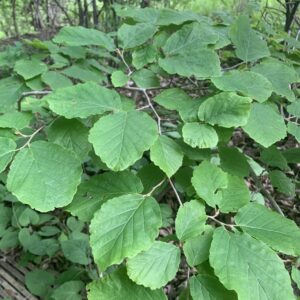
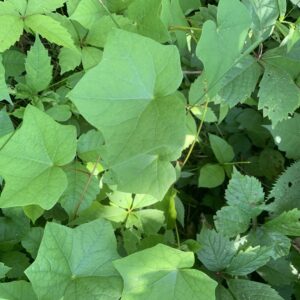
American Black Currant grows as a medium sized shrub with soft lobed leaves and smooth stems. It forms loose colonies in moist woodland environments and provides excellent understory habitat for wildlife.
Its dense foliage offers shelter for birds while its flowers and fruits support a wide range of insects and animals.
A Plant of Forests and Moist Woodlands
American Black Currant occurs naturally in rich deciduous forests, wooded swamps, stream edges, and moist thickets. It grows best in partial shade to full shade and prefers cool moist soils rich in organic matter.
Its roots help stabilize soils in woodland settings while its flowers and fruits contribute to the health of forest ecosystems.
Growing Information
Height: 3–5 ft
Spread: 3–5 ft
Light: Part shade to full shade
Soil: Moist, rich woodland soils
Hardiness: Zone 3–7
Growth Rate: Moderate
Best planted in woodland gardens, forest edges, shade plantings, and wildlife habitat landscapes.
Ecological Importance
American Black Currant:
Provides nectar for early pollinators
Produces berries eaten by birds and small mammals
Creates understory habitat for wildlife
Supports many native insects
Associated Woodland Species
Common companions in natural plant communities include:
• Wild Ginger (Asarum canadense)
• Big-leaved Aster (Eurybia macrophylla)
• Jack-in-the-Pulpit (Arisaema triphyllum)
• Wild Columbine (Aquilegia canadensis)
• Canada Anemone (Anemone canadensis)
• Red Baneberry (Actaea rubra)
• Maidenhair Fern (Adiantum pedatum)
Planting these species together helps recreate resilient woodland ecosystems that support pollinators, birds, and beneficial insects.
Planting to Protect
Restoring to Thrive 🌱
Origin Native Plants 🌱
1 Gallon Pots 🌱
12 in stock