$15.00 Original price was: $15.00.$14.00Current price is: $14.00.
Sand Cherry
Prunus pumila
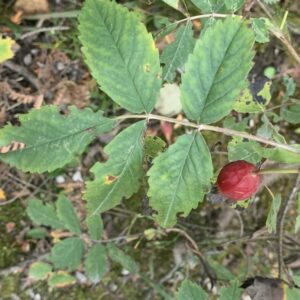
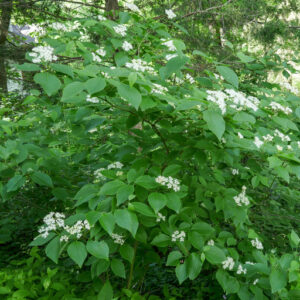
A low-growing native shrub that produces delicate white flowers in early to mid spring before or as the leaves emerge. These fragrant blossoms attract a variety of native bees and early pollinating insects.
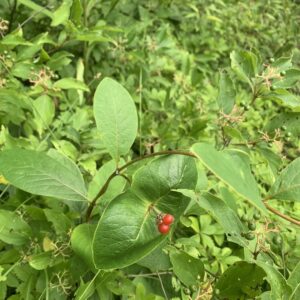
By mid to late summer, the flowers develop into small dark purple to nearly black cherries. The fruits are edible and slightly tart, enjoyed by birds, small mammals, and occasionally used by people for preserves or jellies.
A Tough Native Groundcover Shrub
Sand Cherry grows as a spreading, low shrub with arching branches that form dense colonies over time. Its narrow leaves often take on reddish tones through the season and develop attractive fall color.
Because of its low growth habit and tolerance of harsh conditions, it is excellent for stabilizing sandy soils and exposed sites.
A Plant of Sandy Shores and Open Landscapes
Sand Cherry occurs naturally along sandy shorelines, dunes, prairies, and open sandy fields. It thrives in full sun and well-drained soils and is highly tolerant of drought and wind.
Its spreading root system helps stabilize sand and prevent erosion while its flowers and fruits support pollinators and wildlife.
Growing Information
Height: 1–3 ft
Spread: 4–8 ft
Light: Full sun
Soil: Dry, sandy, well-drained soils
Hardiness: Zone 3–7
Growth Rate: Moderate spreading
Best planted in sandy landscapes, shoreline restoration areas, dry meadows, and naturalized plantings.
Ecological Importance
Sand Cherry:
Provides nectar for early pollinators
Produces cherries eaten by birds and wildlife
Helps stabilize sandy soils and dunes
Supports many native insects
Associated Sandy Meadow & Prairie Species
Common companions in natural plant communities include:
• Little Bluestem (Schizachyrium scoparium)
• Butterfly Weed (Asclepias tuberosa)
• Prairie Smoke (Geum triflorum)
• Smooth Blue Aster (Symphyotrichum laeve)
• Wild Strawberry (Fragaria virginiana)
• Showy Goldenrod (Solidago speciosa)
• Hairy Beardtongue (Penstemon hirsutus)
Planting these species together helps recreate resilient sandy prairie and shoreline ecosystems that support pollinators, birds, and beneficial insects.
Planting to Protect
Restoring to Thrive 🌱
Origin Native Plants 🌱
3.5/5.5 inch Pots 🌱
23 in stock