$18.00 Original price was: $18.00.$16.75Current price is: $16.75.
Snowberry
Symphoricarpos albus
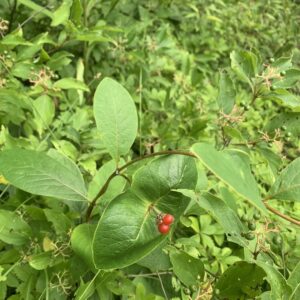
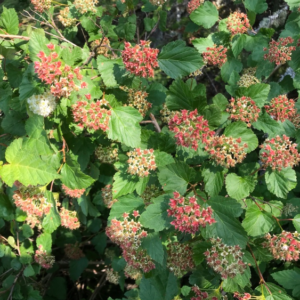
A hardy native shrub known for its clusters of bright white berries that persist well into fall and winter. In late spring to early summer, small pinkish-white bell-shaped flowers appear along the stems, attracting bees and other pollinators.
As the season progresses, the flowers develop into round white berries that stand out against the plant’s soft green foliage. These berries often remain on the branches long after the leaves have dropped, adding winter interest to natural landscapes.
A Resilient Native Shrub
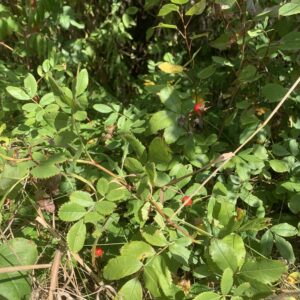
Snowberry forms dense thickets through underground rhizomes, making it excellent for stabilizing soils and filling woodland edges or naturalized areas. Its flexible stems and rounded growth habit create important shelter for birds and small wildlife.
Because it tolerates shade, drought, and a wide range of soils, Snowberry is an adaptable shrub for restoration plantings and natural landscapes.
A Plant of Woodland Edges and Open Thickets
Snowberry grows naturally along woodland edges, open forests, prairies, and stream banks. It thrives in full sun to part shade and adapts to dry or moderately moist soils.
Its ability to spread and form colonies makes it especially useful for habitat restoration and erosion control.
Growing Information
Height: 3–6 ft
Spread: 4–8 ft (spreading colonies)
Light: Full sun to part shade
Soil: Dry to average soils
Hardiness: Zone 3–7
Growth Rate: Moderate spreading shrub
Best planted in hedgerows, woodland edges, habitat plantings, and naturalized landscapes.
Ecological Importance
Snowberry:
Provides nectar for native bees and pollinating insects
Creates shelter and nesting habitat for birds
Produces berries that feed wildlife in late season
Helps stabilize soils in woodland and meadow edges
Associated Woodland Edge & Meadow Species
Common companions in natural plant communities include:
• Smooth Blue Aster (Symphyotrichum laeve)
• New England Aster (Symphyotrichum novae-angliae)
• Wild Columbine (Aquilegia canadensis)
• Black-eyed Susan (Rudbeckia hirta)
• Little Bluestem (Schizachyrium scoparium)
• Wild Bergamot (Monarda fistulosa)
Planting these species together helps recreate resilient meadow and woodland edge ecosystems that support pollinators, birds, and beneficial insects.
Planting to Protect
Restoring to Thrive 🌱
Origin Native Plants 🌱
1 Gallon Pots
12 in stock