$22.00 Original price was: $22.00.$20.00Current price is: $20.00.
Smooth Wild Rose
Rosa blanda
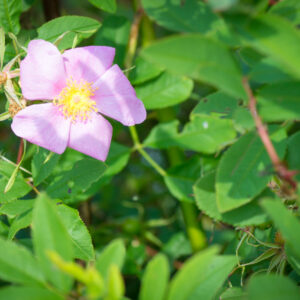
A graceful native rose known for its soft pink flowers and nearly thornless stems. In late spring to early summer, open five-petaled blossoms appear with bright yellow centers that attract a wide range of native bees and other pollinating insects.
After flowering, the plant produces round red rose hips that mature in late summer and persist into fall. These fruits are eaten by birds and wildlife and add seasonal interest to the landscape.
A Gentle Native Rose
Smooth Wild Rose grows as a loose, upright shrub that can slowly form colonies through underground rhizomes. Unlike many roses, its stems have few or no prickles, giving the species its name and making it easier to work around in natural plantings.
Its soft foliage and open growth habit create habitat while still allowing other meadow species to grow nearby.
A Plant of Meadows and Open Woodlands
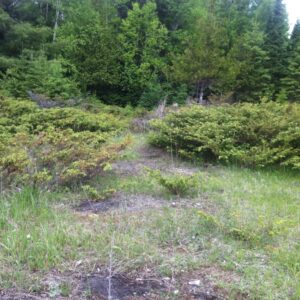
Smooth Wild Rose occurs naturally in prairies, woodland edges, savannas, and open fields. It grows well in full sun to partial shade and tolerates a range of soils from sandy to moderately rich.
Its roots help stabilize soil while the flowers and hips support a wide range of wildlife.
Growing Information
Height: 3–5 ft
Spread: 3–5 ft
Light: Full sun to part shade
Soil: Dry to average, well-drained soils
Hardiness: Zone 3–8
Growth Rate: Moderate
Best planted in meadows, prairie gardens, woodland edges, hedgerows, and wildlife habitat plantings.
Ecological Importance
Smooth Wild Rose:
Provides nectar and pollen for native bees and pollinating insects
Produces rose hips eaten by birds and wildlife
Creates shelter and nesting habitat for birds
Supports many native insects
Associated Meadow & Woodland Edge Species
Common companions in natural plant communities include:
• Little Bluestem (Schizachyrium scoparium)
• Smooth Blue Aster (Symphyotrichum laeve)
• Wild Bergamot (Monarda fistulosa)
• Butterfly Weed (Asclepias tuberosa)
• Canada Anemone (Anemone canadensis)
• Early Goldenrod (Solidago juncea)
• Wild Strawberry (Fragaria virginiana)
Planting these species together helps recreate resilient meadow and woodland edge ecosystems that support pollinators, birds, and beneficial insects.
Planting to Protect
Restoring to Thrive 🌱
Origin Native Plants 🌱
1 Gallon Pots 🌱
9 in stock