$13.00 Original price was: $13.00.$11.77Current price is: $11.77.
Red Baneberry
Actaea rubra
A striking native woodland perennial known for its clusters of bright red berries that appear in mid to late summer. In spring, delicate white flower clusters rise above finely divided foliage, creating a soft and elegant display in shaded forest settings.
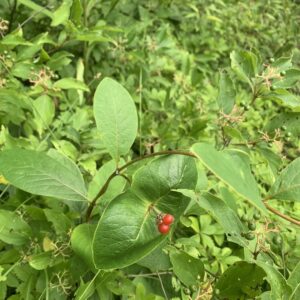
As the season progresses, the flowers develop into glossy red berries held on slender stems above the leaves. These vivid fruits stand out dramatically against the deep green woodland foliage.
A Woodland Plant with Bold Seasonal Interest
Red Baneberry adds beauty and structure to shaded landscapes throughout the growing season. Its finely cut leaves create a lush woodland texture, while the spring flowers and summer berries provide changing visual interest.
Although highly ornamental, the berries are toxic to humans and should not be consumed.
A Plant of Cool Forest Floors
Red Baneberry grows naturally in rich deciduous forests, shaded slopes, and woodland clearings where soils remain moist and fertile. It thrives in part shade to full shade and blends naturally with other woodland species.
Once established, it can form small colonies that contribute to healthy and diverse forest understories.
Growing Information
Height: 1–2.5 ft
Spread: 1–2 ft
Light: Part shade to full shade
Soil: Moist, rich woodland soils
Hardiness: Zone 3–7
Growth Rate: Moderate
Best planted in woodland gardens, forest restorations, shaded borders, and naturalized understory plantings.
Ecological Importance
Red Baneberry:
Provides habitat and seasonal food sources for wildlife
Supports biodiversity in woodland ecosystems
Adds structural diversity to forest understory plant communities
Helps stabilize and enrich woodland soils
Associated Woodland Species
Common companions in natural woodland plant communities include:
• Wild Ginger (Asarum canadense)
• Jack-in-the-Pulpit (Arisaema triphyllum)
• Large-leaved Aster (Eurybia macrophylla)
• White Wood Aster (Eurybia divaricata)
• Foamflower (Tiarella cordifolia)
• Woodland Phlox (Phlox divaricata)
• Trillium (Trillium grandiflorum)
Planting these species together helps recreate layered woodland ecosystems that support pollinators, insects, and forest wildlife.
Planting to Protect
Restoring to Thrive 🌱
Origin Native Plants 🌱
3.5 inch Pots 🌱/or Gallons
17 in stock