$9.77 Original price was: $9.77.$8.77Current price is: $8.77.
Northern Dewberry
Rubus flagellaris
A low-growing native bramble that spreads across open ground with long trailing stems. In late spring, delicate white five-petaled flowers appear above the foliage, attracting bees and other pollinators.
By early to mid summer, the flowers develop into glossy black berries similar to small blackberries. These sweet fruits are enjoyed by birds, small mammals, and people.
A Spreading Native Bramble
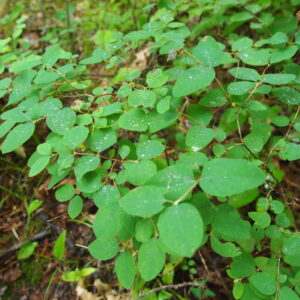
Northern Dewberry grows along the ground with arching stems that root where they touch the soil, forming natural patches over time. Its prickly stems provide protective cover for wildlife while its flowers and fruit support a variety of pollinators and animals.
Because of its trailing growth habit, it works well as a natural groundcover in sunny areas.
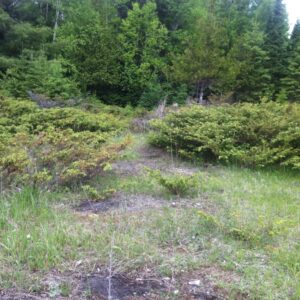
A Plant of Fields, Edges, and Open Woodlands, Shores and Water edges.
Northern Dewberry grows naturally in sandy fields, prairies, woodland edges, and open forests. It thrives in full sun to partial shade and adapts well to dry or moderately moist soils.
Its spreading growth helps stabilize soil and create habitat in open landscapes.
Growing Information
Height: 6–12 inches
Spread: 3–6 ft (spreading trailing stems)
Light: Full sun to part shade
Soil: Dry to average, well-drained soils
Hardiness: Zone 3–8
Growth Rate: Moderate spreading
Best planted in meadow plantings, woodland edges, naturalized landscapes, and wildlife habitat gardens.
Ecological Importance
Northern Dewberry:
Provides nectar and pollen for native bees and pollinating insects
Produces edible berries for birds and wildlife
Creates protective cover for small animals
Helps stabilize soil in open habitats
Associated Meadow & Woodland Edge Species
Common companions in natural plant communities include:
• Wild Bergamot (Monarda fistulosa)
• Smooth Blue Aster (Symphyotrichum laeve)
• New England Aster (Symphyotrichum novae-angliae)
• Little Bluestem (Schizachyrium scoparium)
• Black-eyed Susan (Rudbeckia hirta)
• Butterfly Weed (Asclepias tuberosa)
Planting these species together helps recreate resilient meadow and woodland edge ecosystems that support pollinators, birds, and beneficial insects.
Planting to Protect
Restoring to Thrive 🌱
Origin Native Plants 🌱
3.5 inch Pots 🌱
10 in stock