$7.88 Original price was: $7.88.$7.50Current price is: $7.50.
Common Milkweed
Waabigwan
Asclepias syriaca
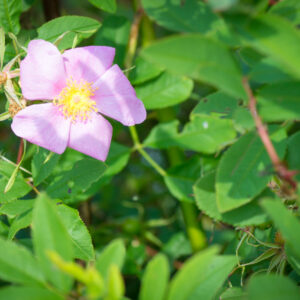
One of the most important native plants for sustaining the Monarch Butterfly. Common Milkweed is a bold prairie species with broad leaves and stout, slightly hairy stems filled with milky white sap. In mid-summer it produces large spherical clusters of fragrant pink flowers that attract a wide variety of pollinators, including monarchs, bees, and beetles.
By late summer and fall, large seed pods form and eventually split open to release silky wind-borne seeds that drift across the landscape.
Waabigwan – The Monarch’s Plant
Waabigwan holds deep ecological importance as the primary host plant for Monarch Butterfly caterpillars. Monarchs lay their eggs on the leaves, and the emerging caterpillars feed exclusively on milkweed foliage. The plant’s milky sap contains compounds that make monarch caterpillars and butterflies toxic to predators, providing them with natural protection.
Historically widespread across fields and meadows, Common Milkweed has declined in many areas due to modern agricultural practices and herbicide use.
A Wildflower of Meadows and Fields
Common Milkweed grows naturally in sunny meadows, open fields, roadside habitats, and prairie edges. It spreads through underground rhizomes, forming colonies that provide important habitat and nectar for many species.
Because of its vigorous growth and spreading habit, it is best suited for meadow plantings, prairie restorations, and naturalized landscapes rather than small garden beds.
Growing Information
Height: 3–5 ft
Spread: 2–4 ft (spreads by rhizomes) and seed
Light: Full sun
Soil: Dry to average soils
Hardiness: Zone 3–9
Growth Rate: Fast
Best planted in meadow restorations, pollinator habitats, naturalized fields, and large native plant gardens.
Ecological Importance
Waabigwan:
Essential host plant for Monarch Butterfly caterpillars
Provides abundant nectar for bees, butterflies, and beetles
Supports numerous specialized native insects
Strengthens prairie and meadow biodiversity
Larval host for
• Monarch Butterfly (Danaus plexippus)
• Milkweed Tussock Moth (Euchaetes egle)
• Large Milkweed Bug (Oncopeltus fasciatus)
Associated Prairie & Meadow Species
Common companions in natural meadow plant communities include:
• Butterfly Weed (Asclepias tuberosa)
• Swamp Milkweed (Asclepias incarnata)
• Wild Bergamot (Monarda fistulosa)
• Black-eyed Susan (Rudbeckia hirta)
• New England Aster (Symphyotrichum novae-angliae)
• Little Bluestem (Schizachyrium scoparium)
Planting these species together helps recreate resilient pollinator habitats that support butterflies, bees, birds, and beneficial insects.
Planting to Protect
Restoring to Thrive ?
Origin Native Plants ?
3.5 inch Pots
.
Out of stock